


By Judith Butler[1] “Women” as the Subject of Feminism For the most part, feminist theory has assumed that there is some existing identity, understood through the category of women, who not only initiates feminist interests and goals within discourse, but constitutes the subject for whom political representation is pursued. But politics and representation are controversial terms. On the one hand, representation serves as the operative term within a political process that seeks to extend visibility and legitimacy to women as political subjects; on the other hand, representation is the normative function of a language which is said either to reveal…

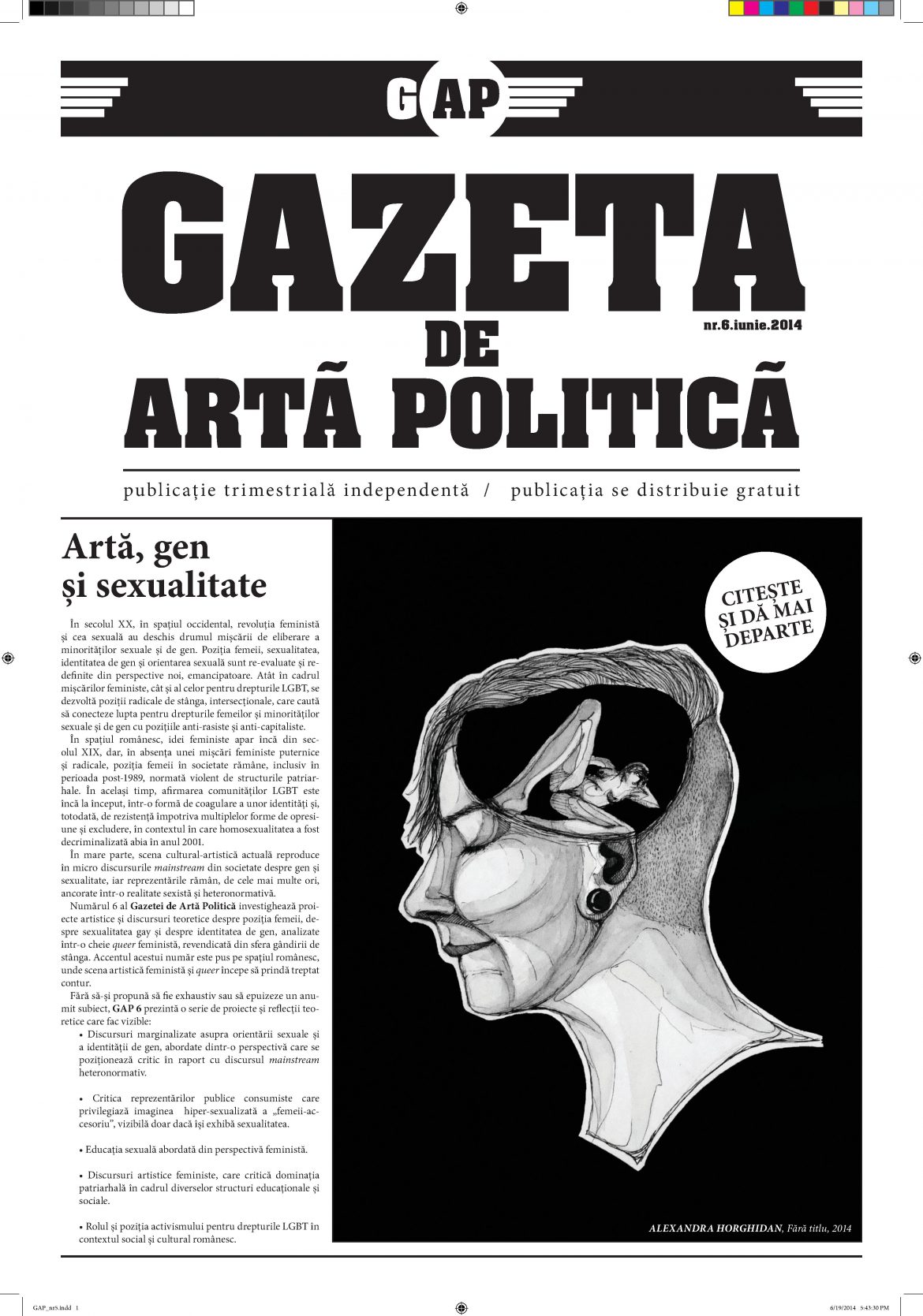
*Tema GAP6 În secolul XX, în spațiul occidental, revoluția feministă și cea sexuală au deschis drumul mișcării de eliberare a minorităților sexuale şi de gen. Poziția femeii, sexualitatea, identitatea de gen și orientarea sexuală sunt re-evaluate și re-definite din perspective noi, emancipatoare. Atât în cadrul mișcărilor feministe, cât și al celor pentru drepturile LGBT, se dezvoltă poziții radicale de stânga, intersecționale, care caută să conecteze lupta pentru drepturile femeilor și minorităților sexuale și de gen cu pozițiile anti-rasiste și anti-capitaliste. În spațiul românesc, idei feministe apar încă din secolul XIX, dar, în absența unei mișcări feministe puternice și radicale, poziția…

The Iakabs have been living in Bucharest without a roof over their heads. The family takes shelter in abandoned buildings and is constantly on the move because they are driven away either by the landlord, by people authorized by the landlord or by other homeless people looking for shelter. In June 2012, the family was forced to leave a place they had occupied after pressures made by a group of young people who wished to turn the location into a cultural center (with autorization from the owner). The building concerned was the one at “Carol 53”. At that time, we…


Interview with Danilo Cajazeira Preparations for major sporting events are often accompanied by the gentrification process enabled by the construction of infrastructure. Brazil is very relevant for this kind of issue, considering that in the next two years I will host two major events – the World Cup of 2014 and the Summer Olympics of 2016 in Rio de Janeiro. 2013 brought with it a surge in protests and resistance to the abuse and injustice inherent in the preparations for these events. I talked about all this with Danilo Cajazeira, a geography teacher and amateur footballer, member of the Sao…
Interview with Enikő Vincze In Decemver 2010, 76 families from Coastei Street in Cluj-Napoca (most of them Roma) were relocated in the vicinity of the city garbage dump at Pata Rât, alongside other ghettoized communities: the one from Dallas and the one from Cantonului Street. Shortly thereafter, the houses from Coastei Street were demolished so that no trace of them would be left. In late May 2011, next to where the houses once stood, authorities and priests laid the foundation for a campus for the Faculty of Theology. The dislocated inhabitants who were now living next to the garbage dump…
Interview with Cristina Eremia Cristina Eremia is a member of Rahova-Uranus-Sabinelor community and the leader of a group of tenants threatened with eviction from the nationalized houses which are being returned by the state to those who claim pre-socialist rights over them. During 2009-2011, she was the co-initiator and host of LaBomba Community Center. In this interview, we talk about the community’s view on the artistic projects and activities in the area, the relation with the artists and the authorities, and the housing issues and ways of struggle. I’d like us to start with the art project in Rahova-Uranus. What…