


Interview with Valentina Ivanov
Valentina Ivanov left Serbia because of the Yugoslav Wars. In 2000, she came to Romania together with her husband and two children. After three years of struggle and lawsuits, Valentina and her family acquired refugee status. Ten years after arriving in Romania, Valentina and her two children became Romanian citizens. Her story inspired one of the five characters from the play Born in the Wrong Place. I met her when we started rehearsing for the performance and she made quite an impression on me. She exudes positive energy and seems to have a smile on her face even when she’s not smiling. Her story is not just the story of asylum, of the refugee or of the immigrant, it is the story of a family looking for peace. When a person shares their life with you, you cannot help feeling responsible for the way in which you transmit their life story further. It’s touching, it’s important and the stakes are higher than personal success, a positive review or one more role in your résumé. You become the bearer of a message, and to me, Valentina is the messenger of peace. (Katia Pascariu)
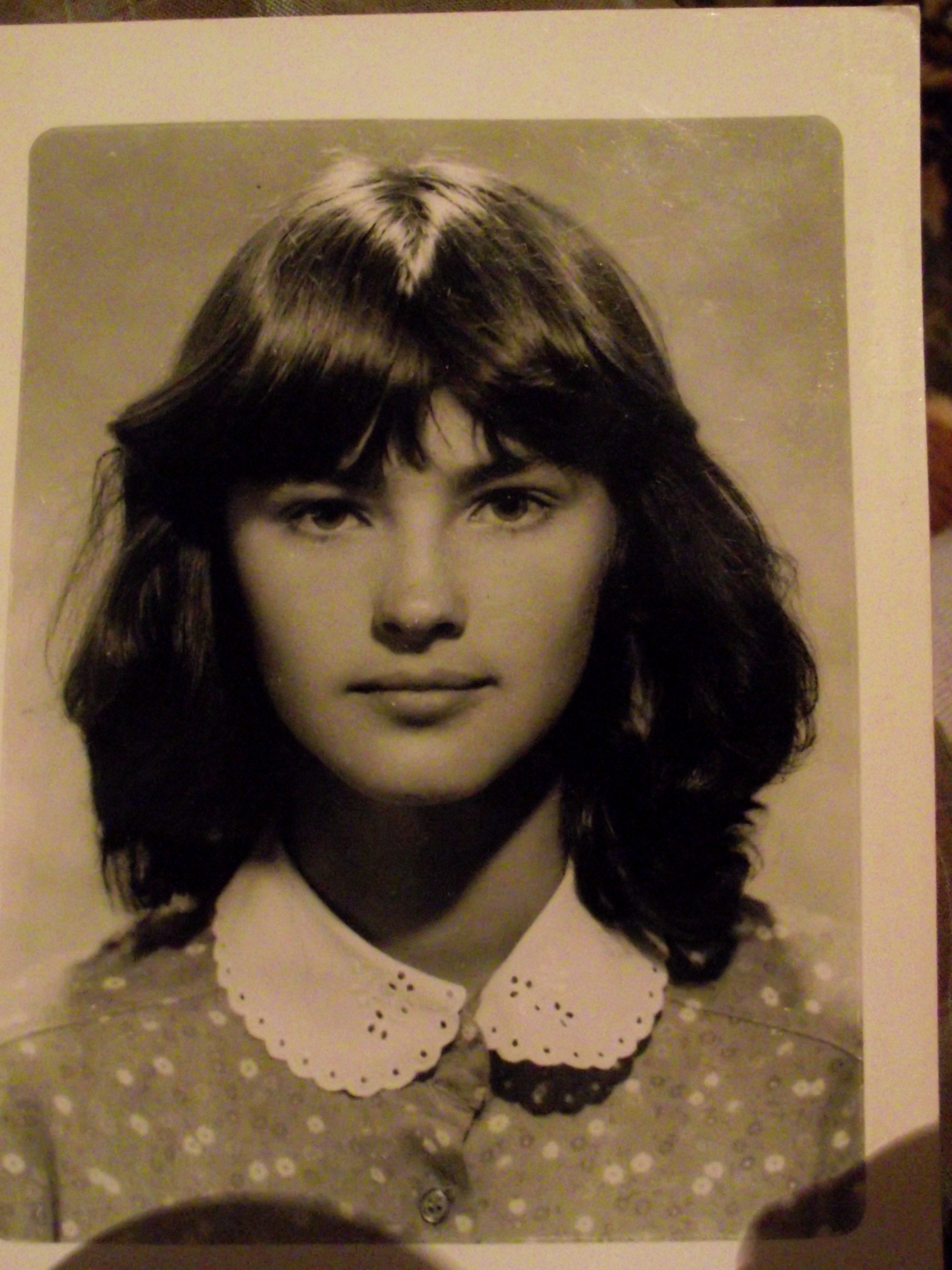
Valentina Ivanov at 14. Photo: Personal archive.
What made you talk about your life to people you didn’t know?
Everywhere I go, I tell my life story. One reason for this is that I want to thank Romania for giving me and my family a new life. This is why I talked about everything that happened in our country and why I left Serbia. To me, it’s important to talk about the war. I’ve lived with war all my life. And that’s why I won’t keep quiet. I want to talk about how terrible war is, how it destroys not just a person’s life, but an entire people. I’ve always said: “May God never allow another country to go through what my country did!” It was a very dirty war. I told you that my grandfather was born in 1892 and lived through the Balkan Wars. Mom and dad were born between 1932 and 1935 and my mother lost her mother in 1947. When I was little, my mother used to talk to me about the partisans, the Germans, about killing, about fear. Grandpa didn’t know how to avoid the accusations of collaborating with the enemy. He always talked about how the Russians came. And when I was about 10, it started in school, too: war this, war that. I studied Marxism, which taught us about Socialism, Communism, Karl Marx, and afterwards, on TV, only war films. Partisans against Germans, all my life. In 1980, when our president Tito died, I had a feeling things would not go well, so I told my dad there was gonna be a war. Because the tensions between the republics became more evident. Yugoslavia had 6 republics and 2 autonomous provinces. Dad used to say: “Shut up, what do you know?”, and I said: “You’ll see.” And that day came. When Slovenia split, there were no problems, the Yugoslav army simply retreated. But in Bosnia it was terrible, the Croats fought the Muslims and the Serbs; and the Muslims fought the Croats and us, and also each other, because there were different kinds of Muslims. Everything was so mixed up, nobody knew who was killing who. I lost an uncle, he was a Muslim. He was shot in the front yard, in front of his family.
When I came to Bucharest and went to the dormitory (The Center for Accommodation and Legal Procedures for Asylum Seekers), at Tudor Gociu, there were 4 floors filled with asylum seekers. We received a room, we shared a kitchen and 4 bathrooms with the others. After a couple of weeks, I thought: “Let’s see how many countries are on our corridor.” Iraq, Afghanistan, Bangladesh, Sri Lanka. When I got to our door, I asked Marko, my son, where we had come from. He told me: “We are Romanians.” I told him: “No, we’re not Romanians, we’re from Serbia.” “Ok, mom…”. He knew even then we would stay in Romania. It was very crowded when we came, in 2000-2001. It was a full house until Romania was admitted to the EU, then people started leaving. Those who had their refugee status left the country and we remained there.
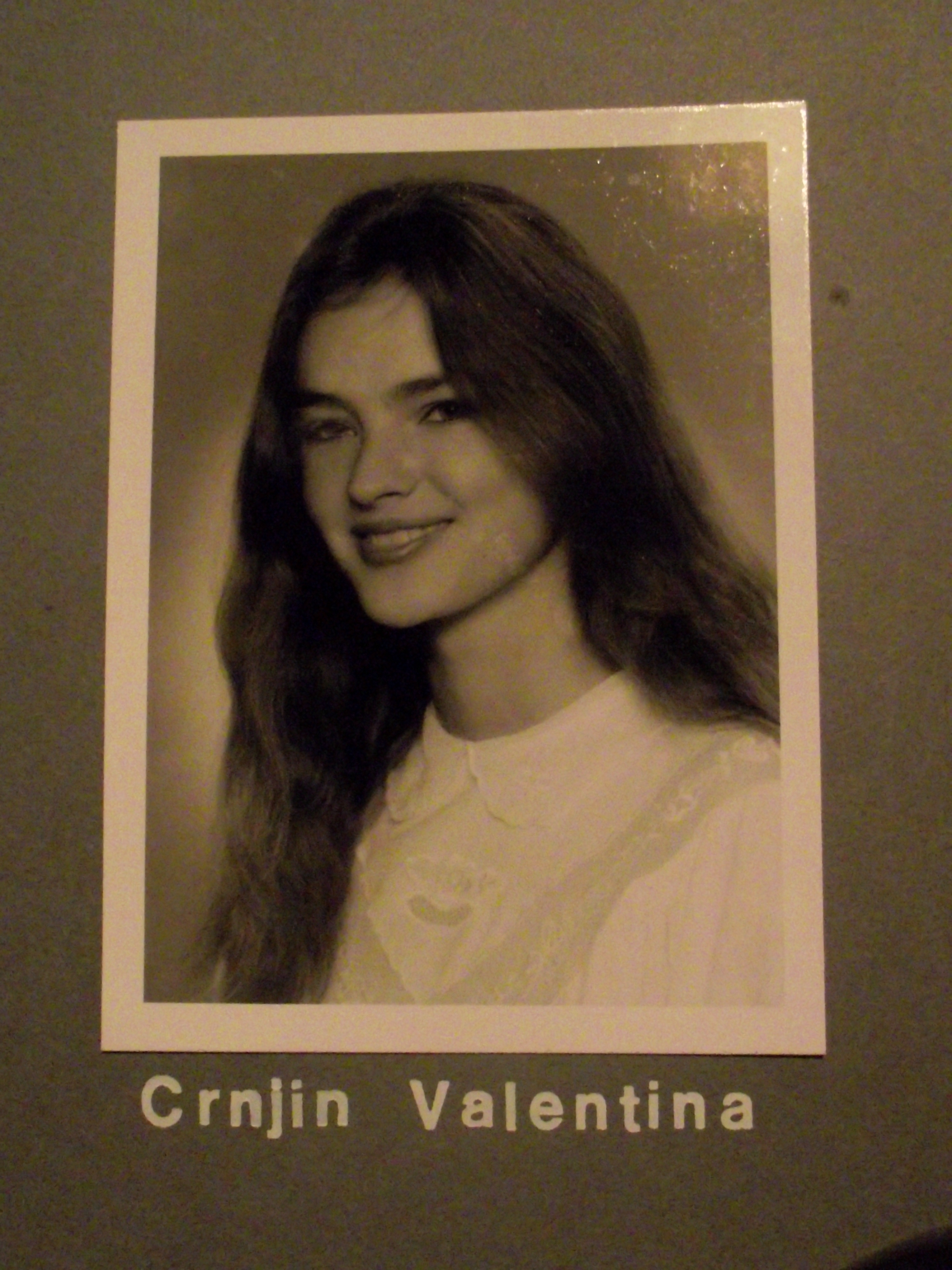
Valentina Ivanov at 18. Photo: Personal archive.
What was your impression of the text?
I liked that you inserted bits from the Romanian legislation, too. The laws are properly drawn up, but nobody applies them right. They did the same in my case. I went from office window to office window until I did what had to be done and it wasn’t easy. When I called the UNHCR (United Nations High Commissioner for Refugees) to ask for help, the lady there told me she can only offer guidance. I said “thank you, but that’s not what I need.” I met a girl from ARCA (Romanian Association for Refugees and Migrants) and she offered to help me get citizenship. She gave me all the materials I needed and she also gave lessons. Until 5 p.m. it was free of charge. But I was at work until 5 and I couldn’t go, and I also couldn’t ask her to stay after 5 without paying. So I thought to ask an organization for help. But nobody did. They kept saying: “We’re not budgeted for that, we can’t help you.” What could I do with one paycheck? Every document requires money, when you translate it, when you certify it with a notary public. Everything costs money and time. I had to pay for the passports and I never went anywhere. I had to make two or three passports every year. Because with citizenship applications, you have to submit your passport along with your ID and us, refugees, had to renew our passports every year, and for me that was 100 lei (roughly 22 euro) for 3 people. I had to pay the state taxes and also the consulate tax. But the latter was paid by ARCA, I have to say. They paid half of it the first time I applied for a residence. […]
What do you feel about the role of the theater? Some say the theater should talk about beautiful things, not embark on a social critique.
People have to see the other side of life, too. Maybe the good side covers up the bad side, except in life there’s more bad than good. Those who only want to see beauty in the theater are those who are afraid of life, of the truth. People need to know a lot of things – not just about refugees. Nobody talks about cancer patients, for instance. It’s a taboo everywhere, not just in Romania. I like to talk about all sorts of issues. I say something, she says something, you say something – and something good has to come out of it. Because I can’t make the best choice on my own. I talk a lot with the kids, we even have meetings. As a mother, I could make all the decisions myself, but I don’t want to… I want them to have a say, too. I did the same with my husband. But not with my parents. They used to say: you’re a girl, you finished school, it’s time to get a job, get married and that’s it. I need to talk about things, have a proper discussion. We fight, we make up, we cry, we laugh. We throw everything out into the open and something good has to come of it. […]
Interview conducted by Katia Pascariu and Alice Monica Marinescu