


Interview with Andrei Sever Bârzan, Andreea Eșanu and Alice Monica Marinescu
“I’m not ashamed to work. We all have the right to work to make ends meet. I wash toilets and I also teach. I’m working, not loitering! And besides, I like working with children. I’ve always loved them.” In 2007, the story of Rodica Sandu – a cleaning lady at Telec school in Bicazu Ardelean – was hyped up by the media, who emphasized the degradation of the education system. Rodica Sandu began teaching English at the school where half the teaching hours were available after she passed the exam and got a 7 (out of 10), which allowed her to be a substitute teacher. In 2009, Bogdan Georgescu (theater director and playwright), together with Andreea Eșanu (actress), began documenting this story and extended the debate to encompass the idea of non-differentiated education, a type of education which downplays acquired social roles and relates to actual community needs. The performance I Am Special was part of the project of active art for community education Turneu la țară (On Tour in the Countryside)[1], a project with an important socio-cultural stake: the rehabilitation of community cultural centers – almost entirely abandoned after 1989 – with an emphasis on their unifying role as environments of social cohesion, participative education and artistic exchange to the benefit of communities which are nowadays removed from the circuit of “high culture.” Turneu la țară debated the significance of certain areas of solidarity which might reconfigure the living culture of contemporary communities which are increasingly made vulnerable by the lack of access to education. Throughout July and August 2009, the performance I Am Special toured the countryside as part of the project of cultural reinstatement of the community centers – a reinstatement of the right to self-representation – and was staged at the community centers in Limanu (Constanța County), Săsarm, Chiuza (Bistriţa-Năsăud County), I.L. Caragiale (Dâmboviţa County), Păușești Măglași (Vâlcea County). On September 30th 2009, there was a presentation of Turneu la țară at the Ministry of Culture and Heritage, accompanied by a proposal to transform the community cultural centers into community centers for creative education and active art (Mihaela Michailov).
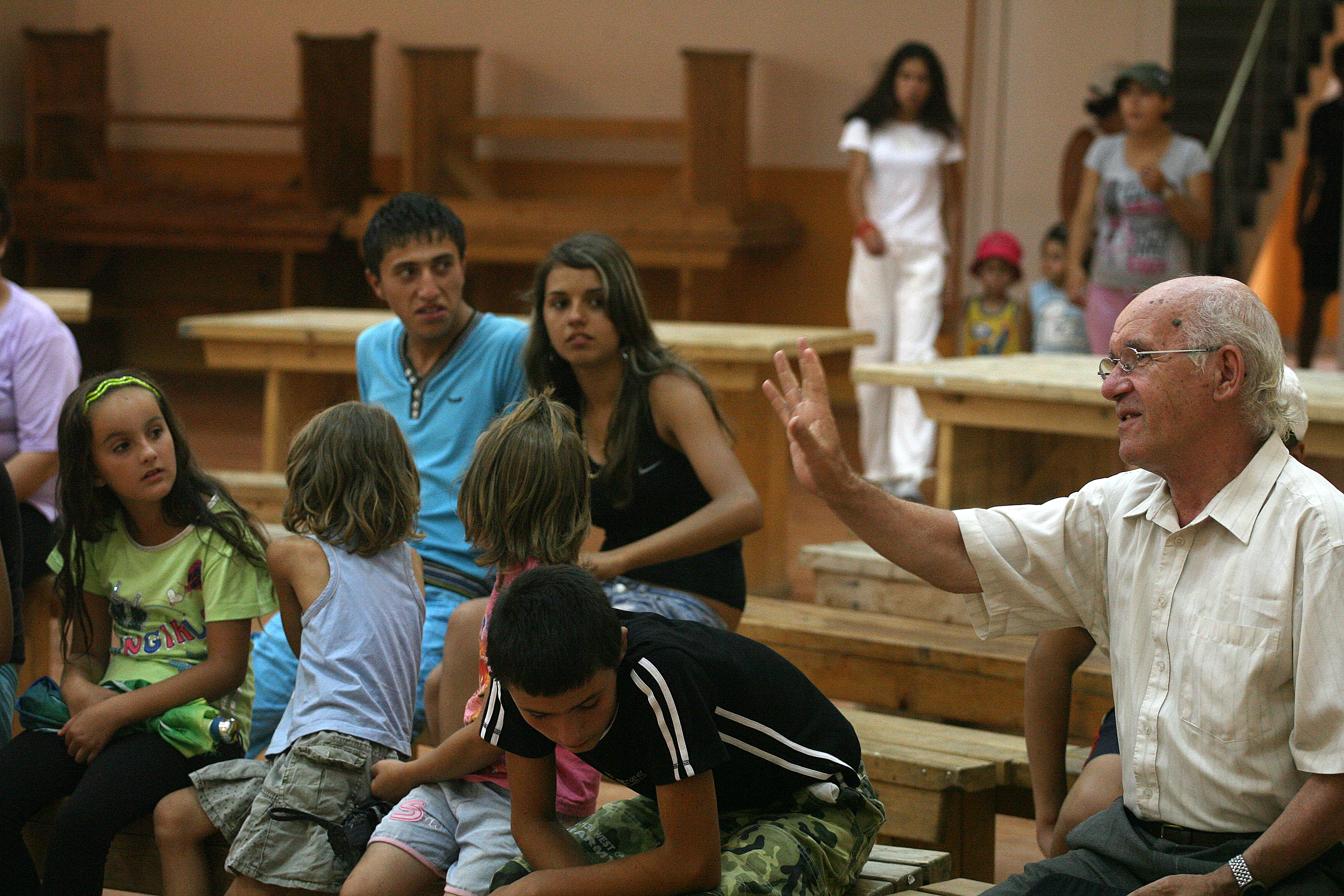
Turneu la țară. Photo: Bogdan Paraschiv
[…]
What was relevant for you in the story of the English teacher who stays on as a cleaning lady? I find that the whole story questions the power relations in the education system and the status of the one who has the right to teach only because he is perceived as such. It also uncovers the horizontality of knowledge and the ability to discover new ways and contexts in which an exchange of knowledge can take place.
Andreea Eșanu: When I first went to Bicazu Ardelean, I was convinced it was a systemic issue and that we’ll be dealing precisely with that: the Ministry isn’t doing anything, there are no teachers available, there’s no opportunity for development in rural areas etc., but after doing research, I was embittered by the discrimination to which the teacher was subjected by the people around her. It turns out they didn’t have a problem with her being a teacher and a cleaning lady, they just had a problem with her being a cleaning lady, period. If she were to decide one day to sell notebooks, they wouldn’t have bought any because she was a cleaning lady. I was completely put off by this aspect of the story. In the performance, all the things I saw her go through built up in me. Her family kept to themselves – in the countryside, I expected to see everyone talking to everyone else. While I was doing research, I interviewed her, the school principal and other school teachers and I felt very strongly the marginalization of her family and the removal of the “shame generator.” The principal asked us not to stage the play there because it would bring the issue back in the public eye and it wouldn’t be OK to have someone write about the cleaning lady yet again. No mention whatsoever of the English teacher who is a part-time cleaning lady, only of the cleaning lady who happens to be teaching English.
Andrei Sever Bârzan: I was very much interested in the social implications of the project – the rehabilitation of the cultural centers, and I was also very preoccupied with the social education the young people were receiving. Not in the sense that I was coming to tell them what was good and bad about their education, but I Am Special gave me the possibility to talk about things from an educational and cultural perspective.
Alice Monica Marinescu: I was also interested in the human story and in the way people positioned themselves, but also in the audience, because we performed in places where people had never seen a theater play before. I was curious to see how they would react, how they would get involved, and I realized how much damage the media can do when it presents only one side of the story without any nuances. You keep thinking that you, as an artist, could even the score. You could recontextualize things and offer another side to the story. The effects were very perverse: during the post-performance discussions, people seemed to hold the teacher in very high regard, but the media had done so much initial damage.
Andreea Eșanu: Monica mentions something very important. During the discussions, people showed their appreciation for the teacher.
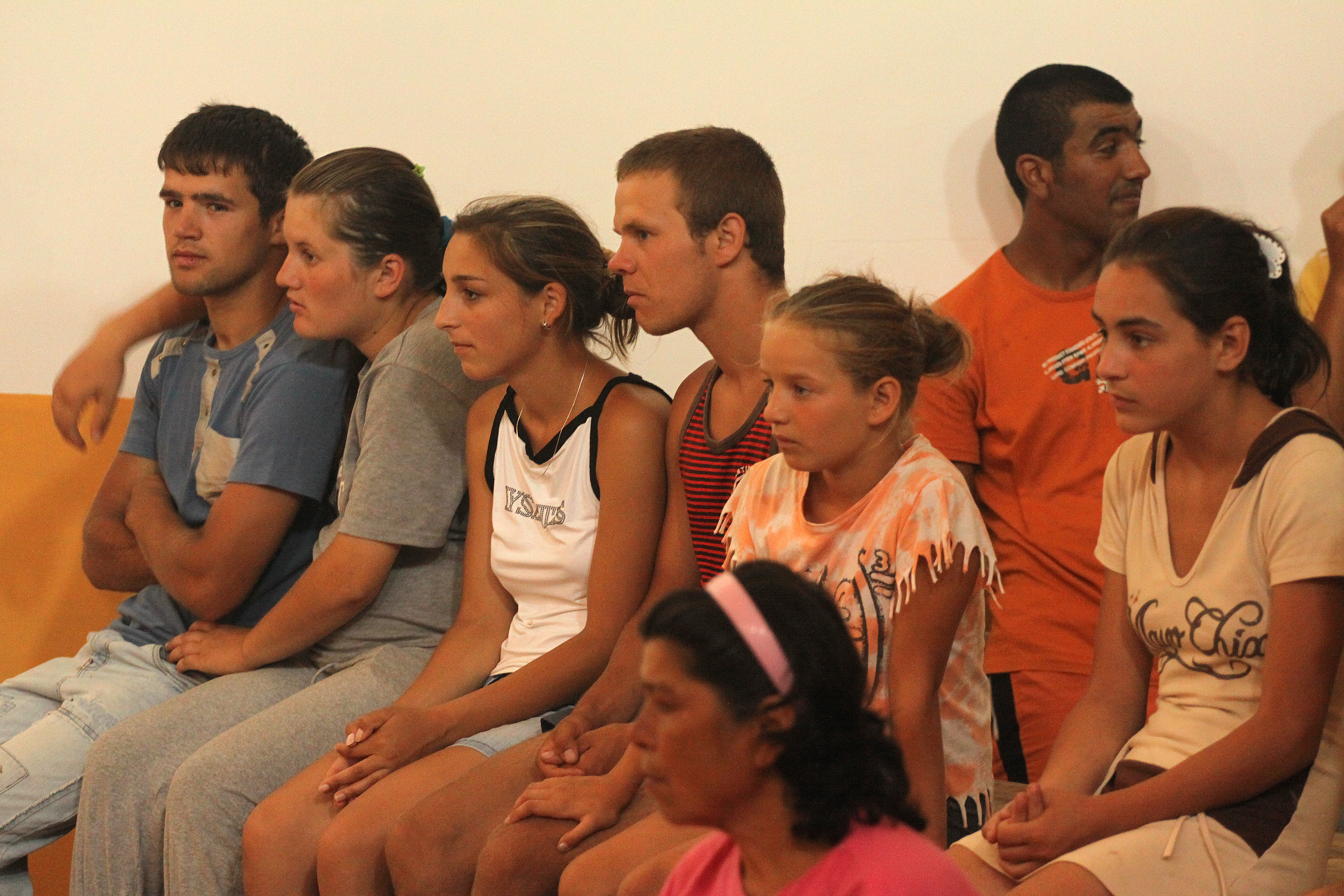
Turneu la țară. Photo: Bogdan Paraschiv.
[…]
Interview conducted by Mihaela Michailov
[1] Project team made up of: Andrei Sever Bârzan, Andreea Eșanu, Bogdan Georgescu, Alice Monica Marinescu, Sânziana Nicola; research: Vlad Georgescu, Bogdan Paraschiv.