


The Iakabs have been living in Bucharest without a roof over their heads. The family takes shelter in abandoned buildings and is constantly on the move because they are driven away either by the landlord, by people authorized by the landlord or by other homeless people looking for shelter. In June 2012, the family was forced to leave a place they had occupied after pressures made by a group of young people who wished to turn the location into a cultural center (with autorization from the owner). The building concerned was the one at “Carol 53”. At that time, we conducted an interview with the Iakabs which we are reprinting here, together with the conclusions we drew then. We recently conducted a second interview which documents the current situation of the family. We tried to shed light on the gentrification process from the point of view of the precarious ones.
- I. Carol 53: anti-squatting and gentrification
by Mihai Codreanu, Arnold Schlachter and Veda Popovici
Carol 53 was introduced on July 25th as a squat. The occupants, mostly students of Architecture, began their presentation by mentioning the landlord’s approval and “the support of architect Sturdza”, the reason for their initiative being “the rescue of a heritage site”. It quickly became clear that the rescue they were talking about was the rescue of a house from people described as “Gypsies stealing iron to make money”. This way, the occupants ended up separating negative squatting from positive squatting. Positive squatting, in their view, “respected” property, its practitioners striving to maintain and consolidate the building. The practitioners of negative squatting, on the other hand, allegedly destroy property. The difference between the two approaches is fueled by a perspective laden with ethnocentric – if not downright racist – prejudice, in which property comes before people. […]
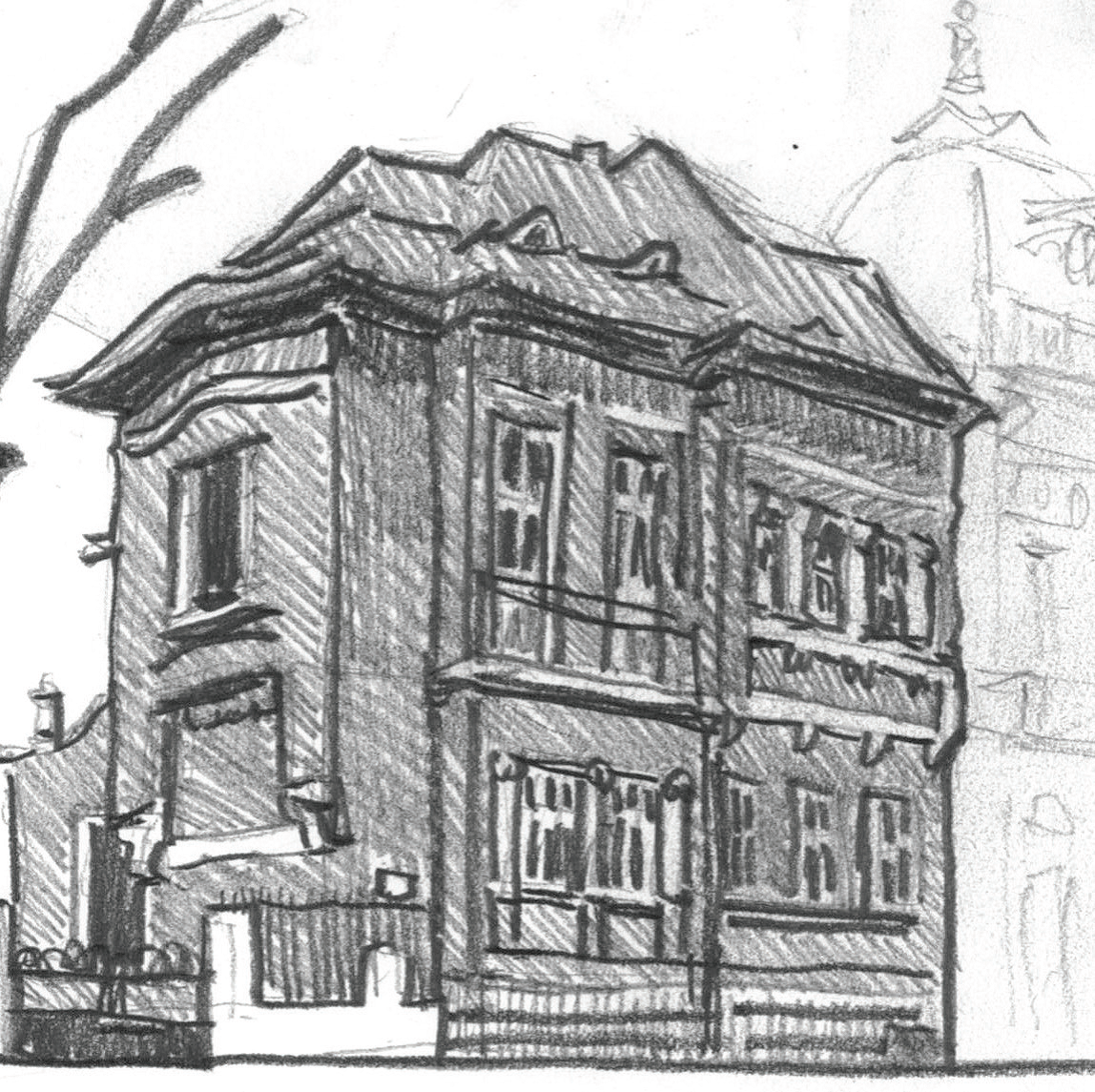
Arnold Schlachter, Carol 53, 2014.
M. C.: What do you know about the building at Carol 53?
Marița Iakab: We knew it had been empty for 7 or 8 years. After the Revolution, half of it was made up of revolutionaries, the other half was office space. We didn’t know who the landlord was.
M. C.: Why did you go into the building?
M. I.: We had nowhere to go. Where I and Silvia were staying, on Banu Manta, they demolished it to make a business.
A. S.: How was your life in the building?
M. I.: It was fine. We stayed upstairs for about 4 days until the architect came – an old man about 50 years old, wearing glasses – and then we moved to the basement. He was with Mihai, a tall, young fellow. They used a key to get in. We figured they were landlords if they used a key. When the architect came, our power was cut.
Sorin Murariu: They told us to clean up in the attic and we worked for about 4 days. The deal was we could stay there. Then I told them we weren’t OK with working for nothing, that I could work somewhere else and that I was losing money. I had to eat something. They told us to trust them. They promised they would let us stay if we worked hard enough. We worked really hard, they used to come and hurry us. But we worked 3 days for nothing, just because we trusted them when they said they wouldn’t throw us out. No tools, no gloves, no nothing. And the rats were big. They’d bite your legs if you weren’t careful. […]
A. S.: Did they pay you eventually?
S. M.: Yes, they gave us 50 lei each. Three people – 150 lei. When people came to rent the place, we were against that, since we were the ones doing the cleaning. They said they’d pay us. They kept pushing us, “keep up, keep up!”. Then they brought another shovel, a wheelbarrow and they said if anything went missing, we’d have to pay for it. We couldn’t sleep at night, we were afraid of burglars. They said they’d call the police if anything went missing, that they had our personal information.
Then, about 10 young boys showed up, they were students and they started working, too: Matei, Dorel and others. Matei is a student of Architecture. He wrote a project so that others would come see their work and not have to pay rent.
A. S.: How long were you here with the students?
S. M.: About a month. They fitted the place with plumbing, but it broke down. A week before they kicked us out, they brought in a toilet. Then Gabi, the foreman, said the landlord had come back from abroad and we have one week left. Matei said we couldn’t stay any longer, that the landlord had returned a couple of weeks ago and he can cause us a lot of trouble with the police. […]
July 31st 2012
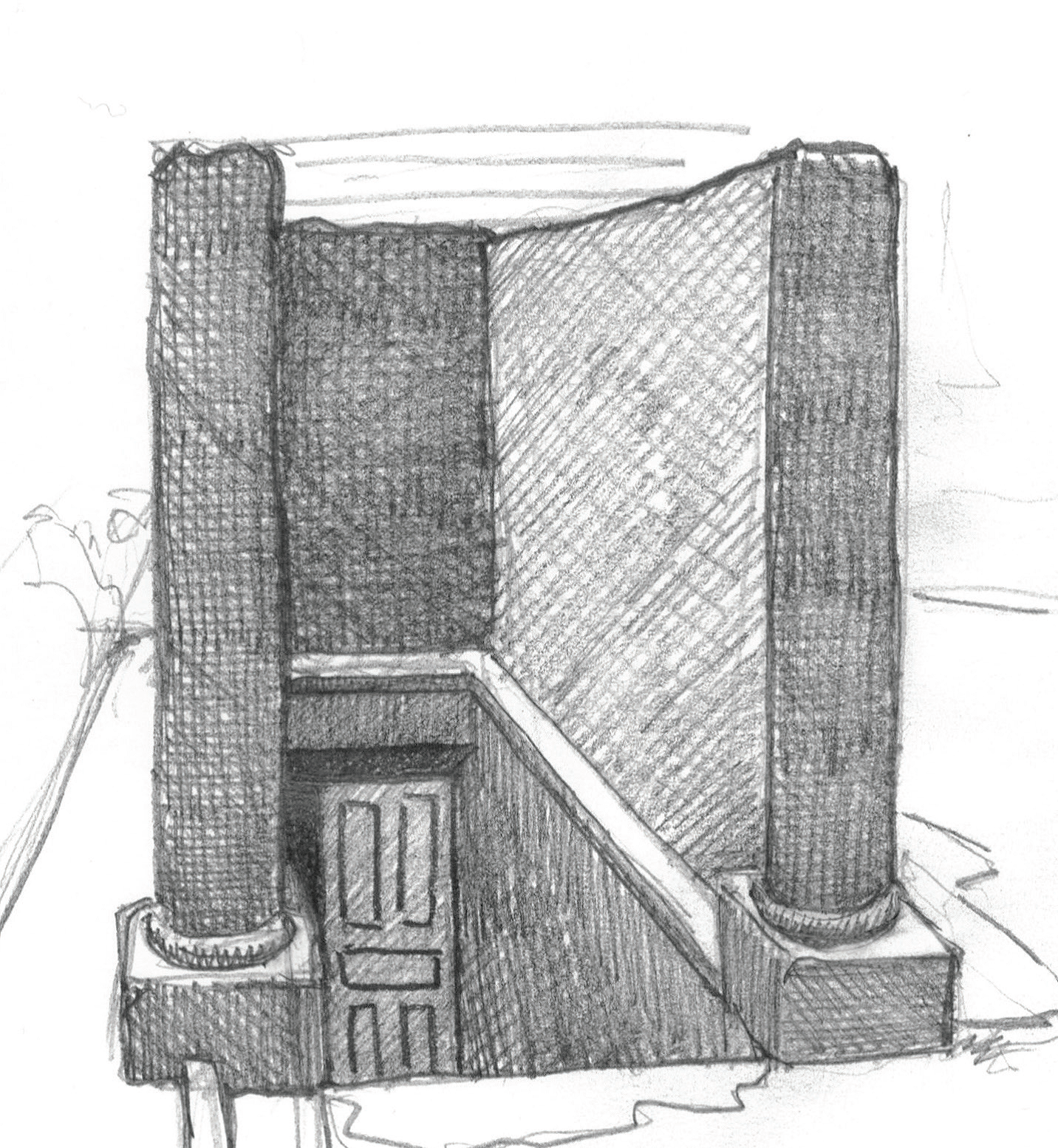
Arnold Schlachter, basement at the crossroad Vulcănescu – Calea Griviței, 2014.
- II. Guarding the ruins
by Mihai Codreanu and Arnold Schlachter
On February 27th 2014, we went to meet with the Iakabs again and talked to Marița Iakab, Sorin Murariu and Dorin Mincu.
M. C.: In the summer of 2012 you were kicked out of Carol 53, where you had been staying for several weeks. Where did you go from there?
Dorin Mincu: I’ll tell you about Carol 53: one of them won the project, the other talked to the landlord behind our backs and we were out. Four of the boys helped us out with the barracks and with medication. From there, we went to the pit (in the Vasile Pârvan area), where we stayed until March 15th 2013. […]
A.S.: Are there any other places you could stay?
M. I.: At Mother and Child at the Arc de Triomphe (The Maternal Center Sf. Ecaterina) we can stay for six months, but men are not allowed. And what do you do after 6 months? There’s a shelter in Bucurestii Noi, on the way to Mogoșoaia. You’re crowded with 100 people whose smell you can’t stand and you’re with a kid after you. There’s no other way! I’m telling you, it was better during Ceaușescu’s time. In two days, you had a home and a job. In 1991, this whole “illegal housing” started. First we stayed at Matache. The houses were empty because people fled to Germany or Italy and the old folks who stayed behind passed away. Others sold their houses. This is what I mean by “illegal housing”. Three years ago you could find places, but now foreigners are buying up everything. […] What isn’t yours… there are clans in cahoots with real-estate agencies. They take it and give it to someone else. […]